
by Bee Gill
Widowhood is one of those subjects we rarely talk about until it happens to someone we know, and even then the conversation tends to last only as long as the funeral. Friends and family gather, food is brought to the house, prayers are said and promises are made that she will never be alone, yet once everyday life resumes for everyone else, she is often left to face a reality that few of us ever stop to think about.
When we picture a widow, most people immediately imagine an elderly woman who shared forty or fifty years with her husband before losing him, but there is another group of women whose stories are rarely told. They are in their twenties, thirties or forties, raising young children, paying mortgages, juggling careers and believing they still have decades ahead of them, until one phone call, one diagnosis or one terrible day changes everything.
In that single moment she doesn’t just lose her husband, she loses the future they had imagined together. The holidays they planned, the grandchildren they hoped to meet, the ordinary conversations over a cup of tea, the comfort of having someone to turn to at the end of a difficult day and the quiet reassurance that whatever happened tomorrow, they would face it together all disappear in an instant, leaving her to somehow explain to children that Daddy isn’t coming home while trying to make sense of it herself.
What I think many people fail to understand is that grief doesn’t give you permission to stop living. The school run still has to be done, packed lunches still have to be made, uniforms still need washing, bills still arrive through the letterbox and children still need comforting when they wake up in the night missing the parent they have lost. While everyone is telling her how amazingly strong she is, she is often surviving minute by minute because there simply isn’t another option.
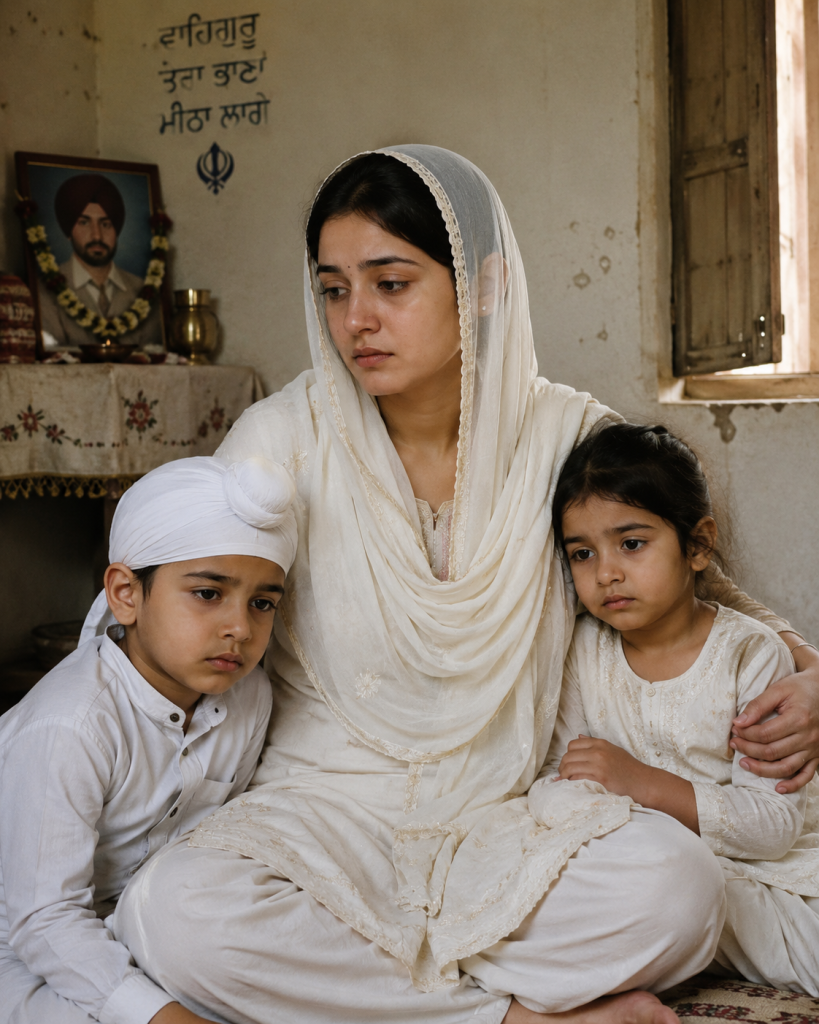
Within Punjabi culture, both in India and across the diaspora, family has always been one of our greatest strengths, yet it can also bring expectations that make widowhood even harder. Traditionally, many widows were expected to put away their colourful suits, remove their jewellery, stop wearing make-up and, in some families, wear white or muted colours, almost as though the world needed a visible reminder that they were grieving. Whether those expectations still exist to the same extent today is open to debate, but many women will tell you they have felt pressure, whether spoken or unspoken, to become smaller, quieter and less visible after losing their husband.
That isn’t to say widowers never carry visible signs of grief. I remember several of my own father’s friends choosing to wear a white turban after losing their wives, and that was a deeply personal expression of love and remembrance. The difference, perhaps, is that it was a choice rather than an expectation. They were rarely expected to change every aspect of their appearance, avoid celebrations or justify smiling again. Their grief was recognised without their identity being quietly rewritten.
Perhaps that is the question we should be asking ourselves. Why has widowhood so often been accompanied by expectations that change not only a woman’s life, but also the way she presents herself to the world? Grief lives in the heart. It cannot be measured by the colour of someone’s clothes, the jewellery they no longer wear, the lipstick they choose to put on or the smile that eventually returns to their face. Those decisions should belong to the person carrying the loss, not to the community watching from the sidelines.
The truth is that widowers deserve far more understanding too. Losing the person you expected to grow old with is devastating whether you are a man or a woman, and there are fathers who suddenly find themselves trying to be both mum and dad, navigating school runs, parents’ evenings, packed lunches and bedtime tears while carrying a grief they often feel unable to express. Men are frequently expected to stay strong, to keep working, to provide and to hold everything together, yet heartbreak doesn’t recognise gender, and neither does loneliness.
I have met widows who have raised remarkable children entirely on their own, managed finances they had never previously dealt with, cared for ageing parents while grieving their own loss and somehow continued to put everyone else’s needs before their own. I have also met widowers who quietly admit that once visitors stopped calling, the silence in the house became almost unbearable because they had lost not only their wife but also their closest friend, their confidante and the person who made a house feel like home.
Perhaps we’ve spent too long comparing grief when there is no comparison to make. Every loss is different, every family is different and every journey through widowhood or widowerhood is unique. What they all have in common, however, is that after the funeral ends and everyone else returns to their own routines, the person left behind is still waking up every morning to a life they never expected to be living.
This is why we believe widowhood deserves a far more honest conversation than it currently receives, and why we will be discussing it on an upcoming episode of In-Laws Out Loud. We want to talk about the realities, the struggles, the expectations, the judgement, the resilience and, most importantly, what our communities can do better for the people left behind.
If you are a widow or a widower, particularly if you lost your partner while your children were still young, would you be willing to share your story with us? Perhaps you watched your own mother or father walk this path, perhaps your sister, brother or friend did, or perhaps you have witnessed first-hand the way losing a partner changes not only a person’s life but also the way society responds to them.
We would genuinely love to hear your experiences, whether in the comments or privately by message. Your story may help another family feel less alone, challenge assumptions that have existed for generations and remind us all that compassion shouldn’t end when the funeral does.
Let’s talk about it.